
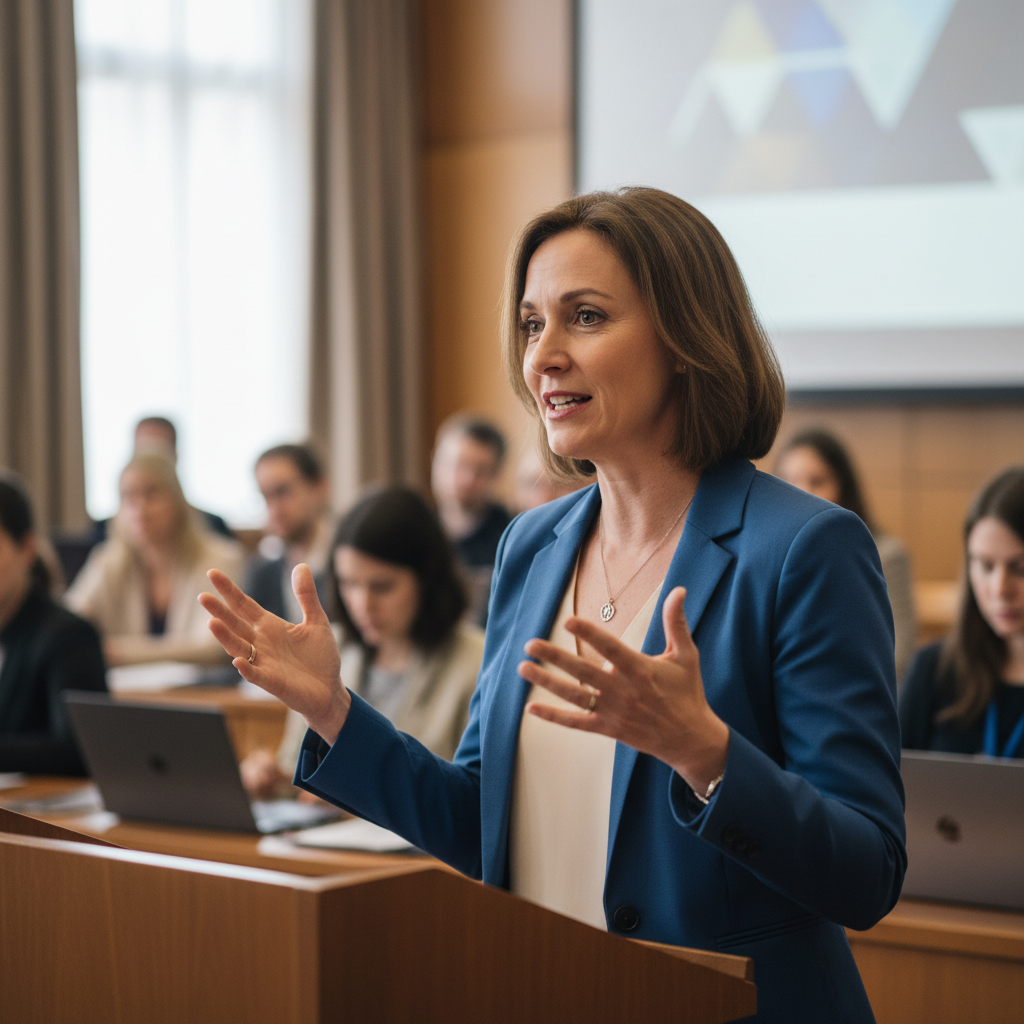
Dr. Miriam Osei-Bonsu · Keynote, ASCD Annual Conference
What If Everything We Measure in Schools Measures the Wrong Thing?
Assessment data has colonized the school day. Administrators carry dashboards like shields. Teachers translate children into percentiles. But what if the entire architecture of measurement was designed to answer questions nobody who loves children ever asked?
One educator's morning, in four acts.
The argument lives in the details. Move through the day. Find where you sit in it.
The house is still. You are three pages into a 2019 paper on retrieval practice when you realize the lead author's conclusion contradicts the intervention your district adopted last fall at considerable expense. You underline a sentence. You pour more coffee. You know you will not bring this up at the 8 AM all-staff.
"The gap between what cognitive science knows about learning and what school systems actually do has not narrowed in twenty years. If anything, it has widened — because now there is more research to ignore."
— from "The Implementation Chasm" by Dr. Jerome Achebe

You arrive early on purpose. You stand near the sixth-grade wing and listen. Room 214: a teacher's voice explaining, patient and clear. Room 215: silence, then laughter — the kind that means something clicked. Room 216: a video playing. You note all three without judgment. You are trying to hear what the walkthrough checklist will never capture.
"The most important data point in any school is the quality of sound in its hallways — not test scores, not attendance rates. A school where children are genuinely thinking makes a particular kind of noise. Most administrators have never been trained to hear it."
— from "Listening as Leadership" by Priya Venkataraman
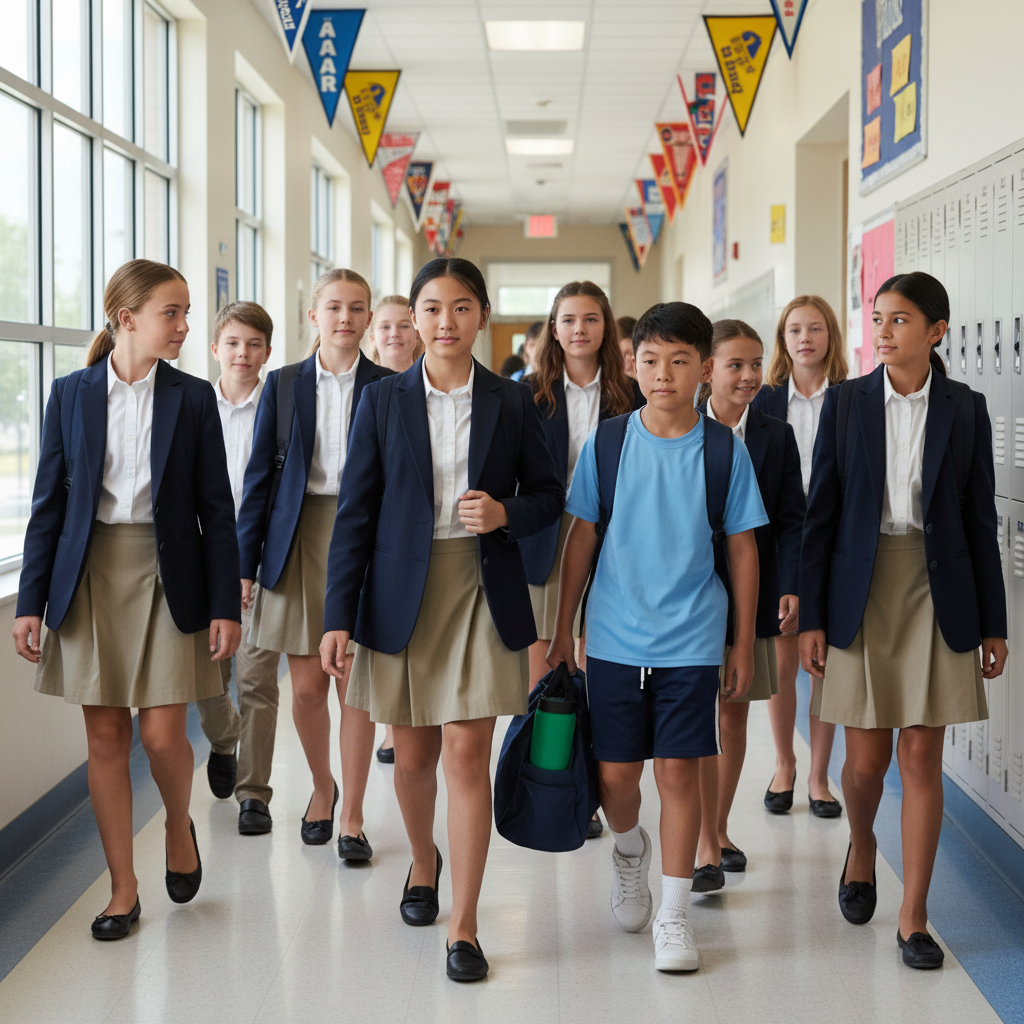
Seventeen people in a room. The dashboard is projected. Someone has color-coded the quartile breaks in red and green. A teacher asks what happens to the children in the red cells. The data coach says that is a great question and pivots to the next slide. You watch three teachers exchange a look that contains an entire argument you will never see in the meeting notes.
"Data-driven instruction is not the problem. The problem is that we have replaced the question 'What does this child need?' with the question 'What does this number mean?' — and called it rigor."
— from "The Quantification of Childhood" by Dr. Miriam Osei-Bonsu

You are walking back through the fourth-grade wing when you see it. A boy — nine years old, the one whose file you know too well — has stopped writing. He is staring at the page with an expression you recognize immediately: the brief, private astonishment of understanding something for the first time. His teacher has not noticed. She is helping someone else. This moment will not appear in any report. It is, nonetheless, the entire point.
"Every theory of learning is ultimately a theory about this moment — the gap between not-knowing and knowing, the instant when something outside a child becomes something inside a child. We have built an entire industry around measuring the aftermath of this moment while remaining almost entirely ignorant of the moment itself."
— from "What If Everything We Measure..." by Dr. Miriam Osei-Bonsu

Where do you sit in this day?
The researcher at 6:15, building arguments from evidence. The listener at 7:40, reading what data can't see. The dissenter at 10:00, holding the question nobody asked. The witness at 3:30, remembering what it's all for.
Discover Your Leadership Lens →Essays Worth the Hour.

The Quiet Crisis in Elementary Reading
Forty percent of fourth graders cannot read proficiently. We have known this for thirty years. The science of reading has offered us a clear path forward. The question is no longer scientific — it is political.
Dr. Fatima Al-Rashidi
Professor of Literacy Studies, Columbia University
Feb 18, 2026

Why Rubrics Lie
A rubric tells a student what you value. It rarely tells them why. And the gap between those two things is where authentic learning either happens or doesn't.
Marcus Okafor
High School Principal, Chicago
Feb 12, 2026
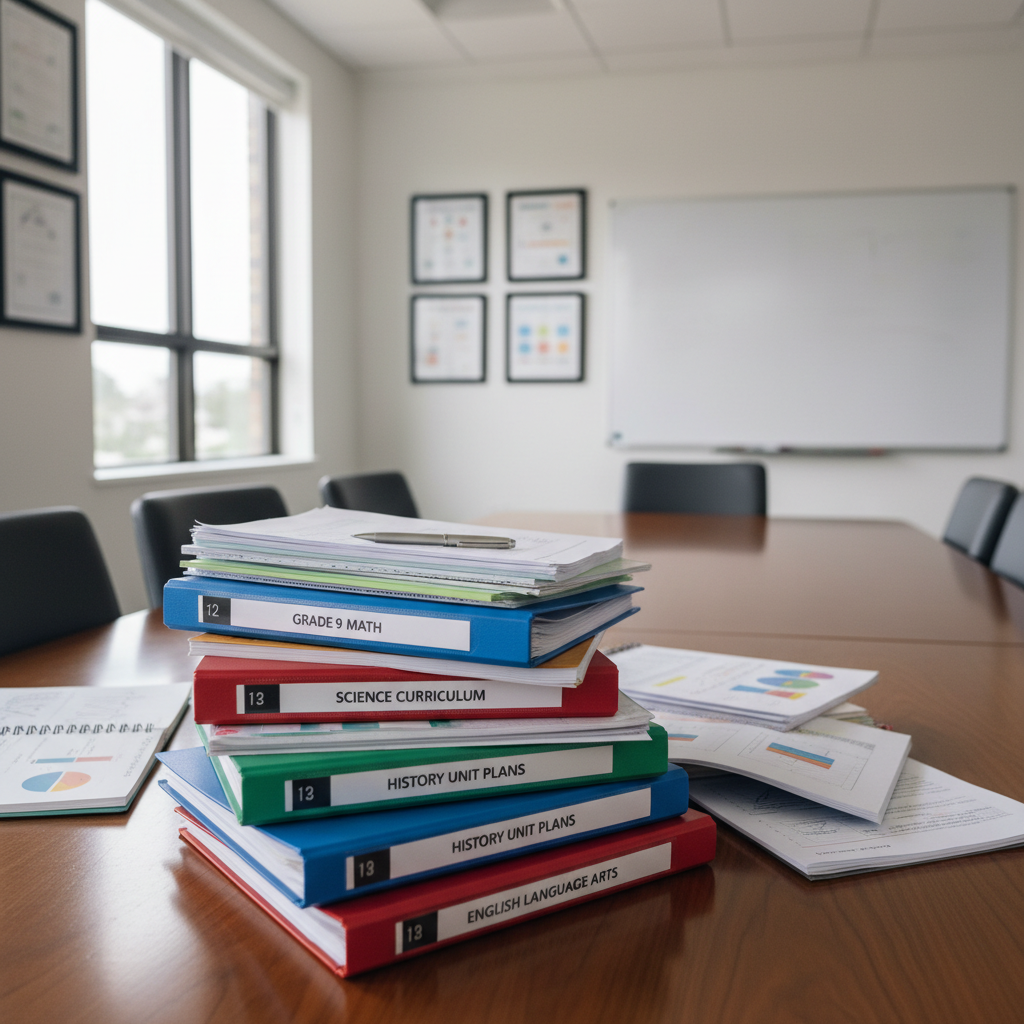
The Scope-and-Sequence Document Nobody Reads
Every district has one. It is usually a PDF last updated in 2019. It governs what a million children learn, and it is written by committee in a language only administrators speak.
Dr. Sunita Krishnaswamy
Curriculum Director, Austin ISD
Feb 5, 2026

What Dewey Got Right That We Keep Forgetting
Experience and Education was published in 1938. It answered questions we are still pretending are new. The amnesia is not accidental.
Prof. Elias Nkrumah
Educational Philosopher, Oxford
Jan 29, 2026
The Lines That Stay With You.
“The most dangerous phrase in education is 'research-based.' It has become a way of ending conversations that should never be ended.”

Dr. Fatima Al-Rashidi
Professor of Literacy Studies · Columbia University
“Children are not behind. They are exactly where the conditions we created for them placed them. The deficit is in our imagination, not their capacity.”
Marcus Okafor
Principal · Chicago Public Schools
“I have sat in a thousand professional development sessions. Not one of them changed what I believed about learning. The ones that changed my practice were books I read alone at midnight.”
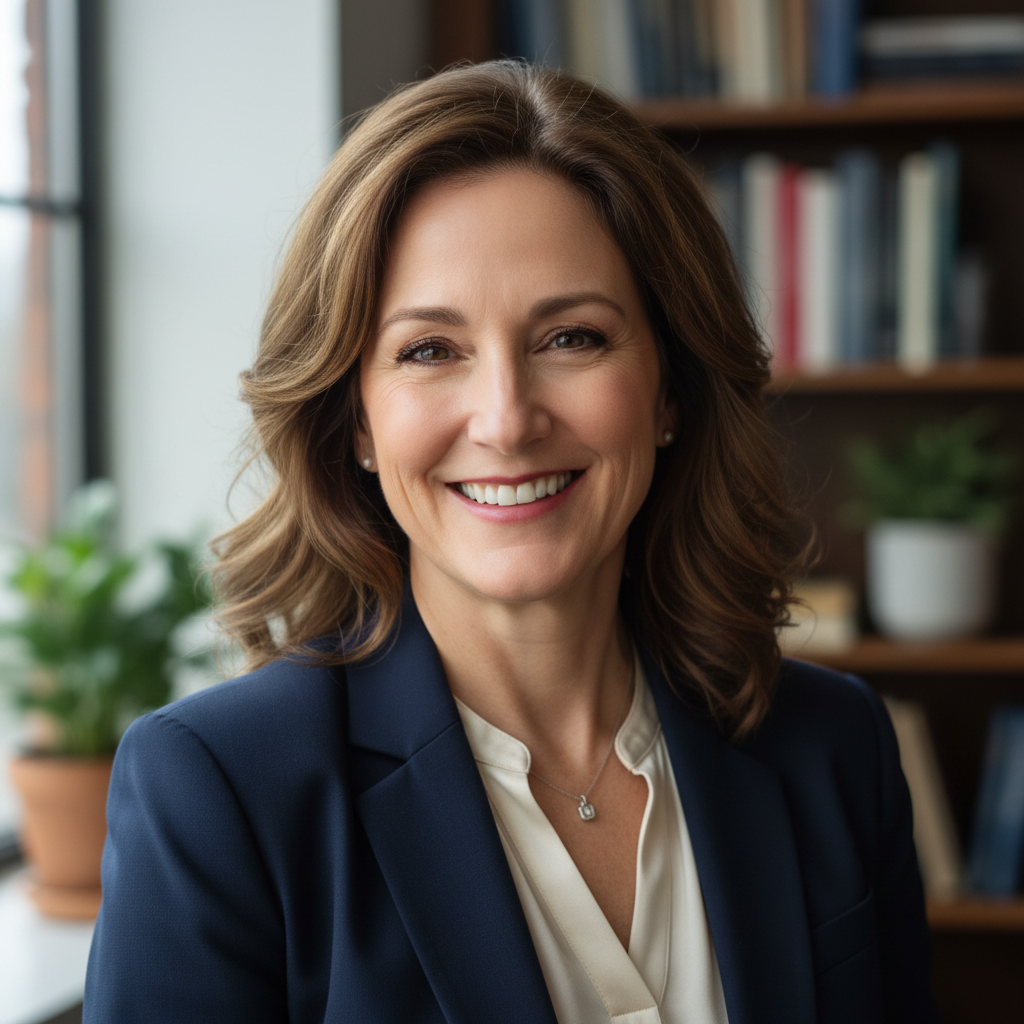
Dr. Sunita Krishnaswamy
Curriculum Director · Austin Independent School District
Discover Your Leadership Lens.
Five real dilemmas. No right answers. A map of how you think when it matters.
It's 7:50 AM. A teacher stops you in the hallway: "My students understand the concept — I can see it in how they talk about it — but the assessment scores don't show it. What do I do?"